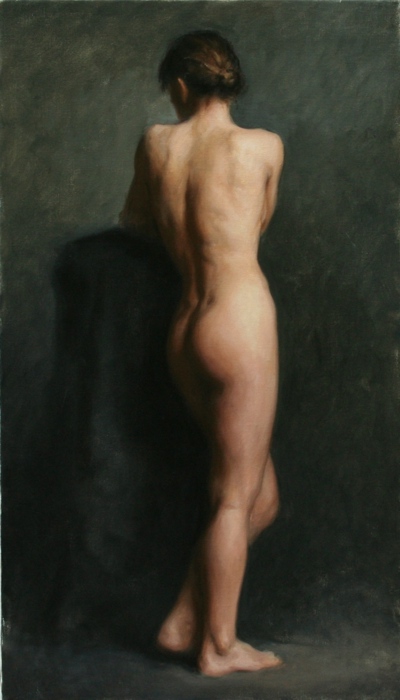
Nicola Hicks is known primarily for her extraordinarily textured sculptures of animals, people and hybrids thereof. Here charcoal drawings and etchings have a brilliant balance between rough physicality and disintegrating ephemeral line.

There size is almost overwhelming, yet there is a delicacy in both the marks (despite their display of bravura) and in the material. Thin brown paper was simply tacked to the wall of the gallery when I last saw here work.

There is some truth in Flowers Gallery’s claim that her work “often combines charm and menace in equal and sometimes devastating measures”.

Gallery
Reminiscent of Giacometti’s paintings, as well as Francis Bacon’s, Anthony Scullion’s figurative paintings is well worth having a look at.


Gallery
Gallery 2
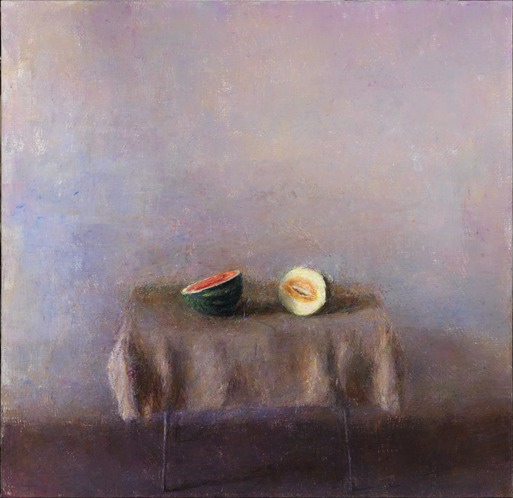
I haven’t posted a still life painter in ages for the simple reason that there are so many painters who seem to do identical, technically excellent, but unimaginative still lifes. Sadie J. Valerie’s experimentation with creating dynamic shapes (i use that word ‘dynamic’ begrudgingly as i hate it and read it far too often, though here it does seem applicable) and lyrical compositions are far more engaging. Certainly one to watch.


Website
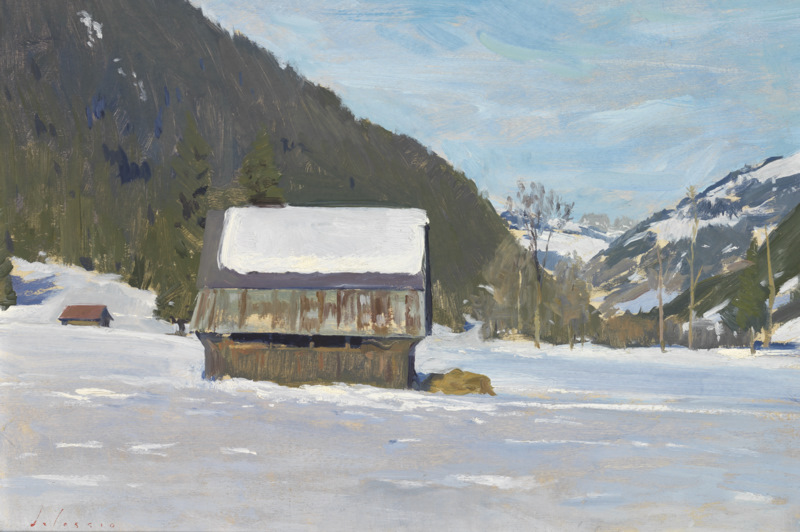
Landscape painters often talk of ‘capturing the light’, yet few do that so well as David Curtis.


He also does more delicate watercolours.
Website
Wonderfully varied, absurdly prolific and imbued with that same sense of the spiritual which Rembrandt’s work possesses, the drawings and paintings of Charlie Mackesy are well work checking out.


Website
Gallery
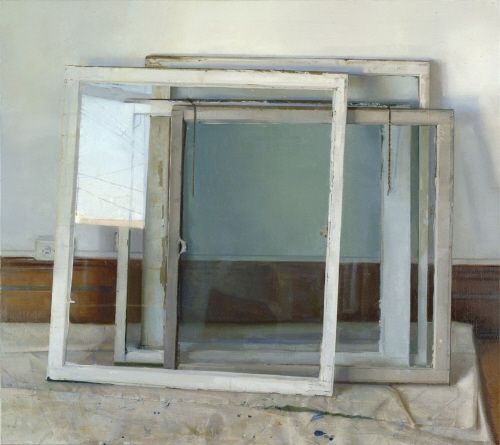
I can’t really put my finger on what it is I like about Sangram Majumdar’s work. There’s a vibration in the crisp areas of flat colour that come together to form images of an intriguing psychological quality.

Stylistically there’s something of Euan Uglow in the careful delineation and measurement. But while I often find Uglow’s compositions lacking in anything of interest beyond surface quality, Majumdar’s seem to have a particularly curious atmosphere.

His work in charcoal is equally fascinating. They capture moments of intense business, but rather than doing so in an ethereal impressionist way, they crystalise them with a variety of sharp clarity and murky obscurity.

Website
Landscapes time. This time it’s the watercolours of Joseph Zbukvic. I’ve no idea how to pronounce his name, but I know i love his work. I hold in high regard any painter who can show the over-painted subject of Venice in a way that makes me look at the city afresh. He’s not limited to Venice though, with work covering both urban and rural environments.

A sense of atmosphere is combined with visually absorbing compositions, which have a brilliant sense of focus that keeps you looking around the image, stopping here and there to admire the variations between a broad and tight focus.

A low chroma keeps his colours harmonious and avoids the common pitfall of the brightly coloured touristy images of Venice. Like Whistler’s etchings of the place, one gets a sense of the artist’s fascination with the light around him, rather than a postcard-type image that is peddled to the millions of tourists.

Gallery at Melbourne Fine Art
Gallery at Artists Realm
Gallery at Greenhouse Gallery
A couple of years ago Frances Bell won the De Laszlo Prize for Best Portrait by an under 35 year old from the Royal Society of Portrait Painters. She’s a certainly a painter to keep one’s eye on.

She trained in Florence at Charles Cecil Studios where she has also taught sporadically. This training means a focus on painting from life ’sight-size’ in the tradition of the great portrait portrait painters in Britain in the 18th century, such as Raeburn and Lawrence.

Website

Jeffrey Hein’s work is utterly modern and utterly traditional. Design, colour and focus describe his work fairly nicely. His work consists largely of figures, often in coloured sunglasses, on an abstract background, painted with great sensitivity

Lately his work has been exploring new directions, becoming darker and moodier with less of the early abstractions.

Website
Blog
Interview
Howard J Morgan is often called a portrait painter, being a member of the Royal Society of Portrait Painters, and having completed commissions of numerous noteworthy figures. However, his work is a great deal more varied than the title might suggest, and even his portrait work has the appearence of the artist painting a person that interests him, rather than creating a happy likeness on demand.

A certain adeptness in the way he controls thick juicy wiggles of paint to create clear lively forms makes one think of something between Hals, Sargent and De Laszlo but with such a contemporary spirit. Images of parties, hippies, beaches and strange semi-magical scenes make up much of his work

Unfortunately his website is woefully inadequate if one wants to look at images of his work bigger than a credit card, so one has to search around the web. Really though, seeing his work ‘in the flesh’ so to speak, is the only decent way to see his work. Smallish exhibitions happen occasionally, and his work crops up in group exhibitions every now and then.

Website